
The Best Safari in Sri Lanka: Choosing Between Yala, Udawalawe, and Minneriya
For nature enthusiasts and adventure seekers, a Sri Lanka safari is often the crowning jewel of an island itinerary. Despite its relatively compact size, Sri Lanka boasts a staggering density of biodiversity, offering wildlife encounters that rival some of the most famous reserves in Africa. However, because the island features distinct microclimates, varied topographies, and shifting monsoon seasons, deciding where to go can be a complex decision.
When planning a luxury journey with Baurs Travels, one of the most common questions our travel specialists receive is: “Which is the best safari in Sri Lanka?” The answer almost always comes down to a choice between the island’s three most iconic wildlife reserves: Yala, Udawalawe, and Minneriya.
Each of these Sri Lanka national parks offers a profoundly different experience. One is world-renowned for its elusive leopards; another guarantees year-round elephant sightings against a backdrop of dramatic mountains; and the third hosts one of the greatest wildlife spectacles on earth during the dry season.
Drawing on our legacy of blending Swiss precision with Sri Lankan hospitality since 1975, our team at Baurs Travels has crafted this comprehensive guide to help you compare Yala vs Udawalawe, understand the magic of a Minneriya safari, and choose the perfect wildlife experience for your bespoke itinerary.
Why a Sri Lanka Safari is a World-Class Wildlife Experience
Before diving into the specific parks, it is important to understand what makes a safari in Sri Lanka so unique. Unlike the vast, endless savannahs of East Africa, Sri Lanka’s wilderness is characterized by dense scrub jungles, ancient reservoirs (known locally as “tanks”), towering monsoon forests, and coastal lagoons. This diverse terrain creates highly concentrated pockets of wildlife.
Sri Lanka is one of the few places in the world where you can see the largest land mammal (the Asian elephant) and the largest marine mammal (the blue whale) on the very same day. The island is home to endemic species found nowhere else on earth, including the Sri Lankan leopard (Panthera pardus kotiya), which is the apex predator of the island, allowing it to roam with a confidence rarely seen in leopards elsewhere.
However, successful wildlife viewing in Sri Lanka requires strategic planning. Animal movements are heavily dictated by the island’s two distinct monsoon seasons. As water sources dry up in certain regions, animals migrate toward permanent reservoirs. Understanding these ecological rhythms is the key to unlocking the best safari Sri Lanka has to offer.
The Great Debate: Yala vs. Udawalawe vs. Minneriya
To help you make an informed decision at a glance, we have compiled a comprehensive comparison table detailing the essential characteristics of the three premier safari destinations. This table highlights the best use cases, expected wildlife, seasonal variations, and logistical considerations for your itinerary.
| Criteria | Yala National Park | Udawalawe National Park | Minneriya National Park |
| Best For | Leopards, sloth bears, and diverse big game viewing. | Guaranteed elephant sightings and stunning landscapes. | Witnessing massive herds of elephants (The Gathering). |
| Likely Wildlife | Leopards, elephants, sloth bears, crocodiles, spotted deer, wild boar, peacocks. | Large elephant herds, water buffalo, crocodiles, raptors (eagles), macaques. | Hundreds of elephants, aquatic birds, sambar deer, occasional macaques. |
| Crowd Level | Very High (especially in Block 1 during peak season). | Moderate (quieter than Yala, but busy during holidays). | High during “The Gathering” (August/September), otherwise low. |
| Best Season | February to July (Dry season draws animals to waterholes). | Year-round (elephants are residents and do not migrate). | July to October (Peak “Gathering” is usually August/September). |
| Route Fit | Southern Coast, Tangalle, Ella, or Tissamaharama itineraries. | Transit between the Southern Coast and the Hill Country (Ella/Nuwara Eliya). | Cultural Triangle itineraries (Sigiriya, Dambulla, Polonnaruwa). |
| Morning vs. Afternoon | Early morning (6:00 AM) is crucial for leopard activity before the heat sets in. | Afternoon (3:00 PM) is excellent as elephants move toward the reservoir to bathe. | Late afternoon (3:00 PM) is mandatory to see the herds emerge from the forest. |
| Journey Time Context | Approx. 4-5 hours from Colombo; 2 hours from Ella; 1 hour from Tangalle. | Approx. 4 hours from Colombo; 2 hours from Ella; 1.5 hours from South Coast. | Approx. 4 hours from Colombo; 30-45 mins from Sigiriya/Dambulla. |
Yala National Park: The Realm of the Leopard
When travelers search for a Yala safari, they are usually driven by one primary goal: spotting the elusive Sri Lankan leopard. Located in the southeastern corner of the island, hugging the Indian Ocean, Yala is Sri Lanka’s most famous and second-largest national park.
What Makes a Yala Safari Special?
Yala’s global reputation is built on its extraordinary leopard density. Block 1 of the park is widely cited as having one of the highest densities of leopards in the world. Because the Sri Lankan leopard has no natural predators on the island (unlike in Africa where they must compete with lions and hyenas), they are surprisingly diurnal and often seen strolling down jeep tracks or lounging on massive granite outcrops.
Beyond leopards, Yala offers the most diverse “classic” safari experience in Sri Lanka. The terrain is a striking mix of thorny scrub jungle, brackish lagoons, and open parkland. This diversity of habitat supports a wide array of species, making every turn on the dusty trails unpredictable.
Wildlife to Expect
- The Sri Lankan Leopard: The undisputed star of the park.
- Sloth Bears: Highly elusive, but sightings peak in May and June when the sweet Palu trees bear fruit, drawing them out of the dense jungle.
- Elephants: While not as numerous as in Udawalawe, small herds and solitary tuskers roam the park.
- Reptiles and Amphibians: Mugger crocodiles basking by waterholes, land monitors, and star tortoises.
- Birdlife: A paradise for birdwatchers, featuring painted storks, crested serpent eagles, and the vibrant Indian peafowl.
Best Time to Visit & Seasonal Closures
The optimum time for a Yala safari is during the dry season, from February to July. As the smaller water sources dry up, wildlife is forced to congregate around the larger, permanent waterholes, making sightings much more predictable for our expert trackers.
Important Logistical Note: To allow the flora and fauna to recover from the drought and human presence, the Department of Wildlife Conservation typically closes Yala Block 1 for maintenance every year, usually from early September to late October. (As of the 2024/2025 season, these dates remain the standard protocol, though exact dates shift slightly based on rainfall. Baurs Travels monitors these closures closely to adjust our clients’ itineraries seamlessly.)
Managing the Crowds in Yala
The primary drawback of Yala is its immense popularity. During peak season, a leopard sighting can result in a “jeep jam,” where dozens of vehicles converge on a single spot.
At Baurs Travels, we mitigate this by utilizing highly experienced, premium driver-guides who know how to avoid the main bottlenecks. We also frequently recommend exploring Block 5 or the adjacent Lunugamvehera National Park. While leopard sightings are slightly less frequent in these sectors, the experience is vastly more serene, authentic, and enjoyable for those who prefer a quieter connection with nature.
Udawalawe National Park: The Elephant Guarantee
If your dream is to watch herds of wild elephants interacting in their natural habitat, an Udawalawe safari is unparalleled. Located on the boundary of Sri Lanka’s wet and dry zones, Udawalawe was created in the 1970s to provide a sanctuary for wild animals displaced by the construction of the Udawalawe Reservoir.
What Makes an Udawalawe Safari Special?
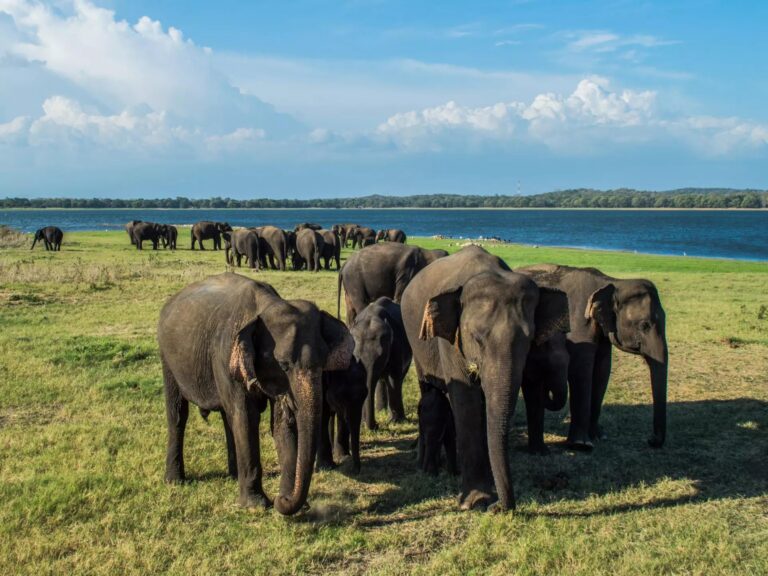
Udawalawe is widely considered one of the best places in the world to see wild Asian elephants. The landscape here is markedly different from Yala. Instead of dense scrub, Udawalawe features vast stretches of open grassland and abandoned teak plantations, centered around the massive, shimmering reservoir.
This open topography means that visibility is exceptional. You do not have to peer through dense bushes to spot wildlife; the animals are often visible from a great distance against the dramatic backdrop of the central highlands.
Wildlife to Expect
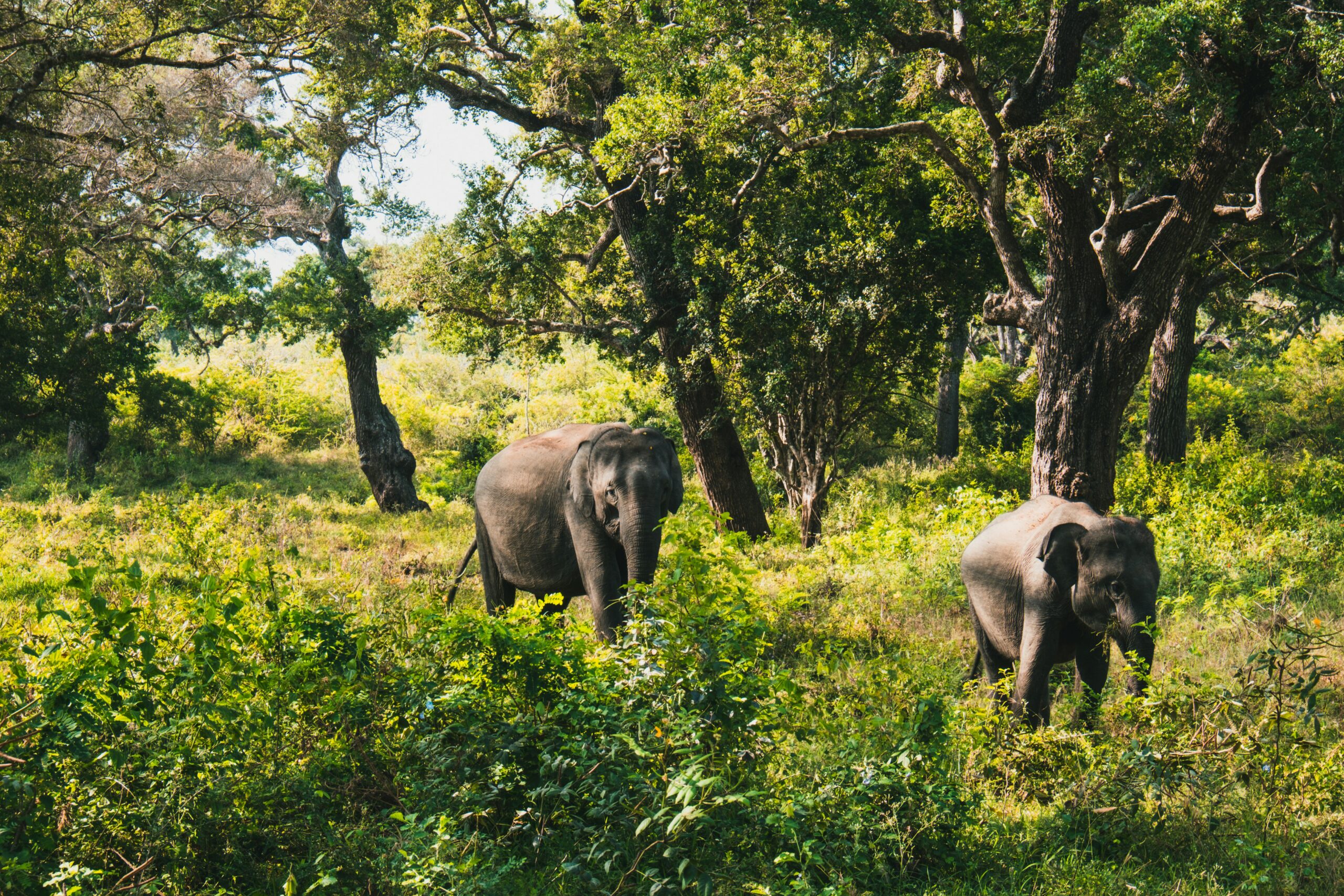
- Asian Elephants: The park supports a resident population of several hundred elephants. It is common to see herds of females and calves bathing, feeding, and socializing.
- Water Buffalo and Crocodiles: The reservoir edges are teeming with wild buffalo and opportunistic mugger crocodiles.
- Avian Predators: Udawalawe is exceptional for raptors, including the white-bellied sea eagle, changeable hawk-eagle, and the grey-headed fish eagle.
- Other Mammals: While leopards and sloth bears reside in the park, sightings are incredibly rare. You are, however, likely to see golden jackals, spotted deer, and toque macaques.
Best Time to Visit
One of the greatest advantages of Udawalawe is its year-round reliability. Because the reservoir provides a permanent water source, the elephants do not migrate away during the dry season. Whether you visit in January or August, your chances of a spectacular elephant encounter remain exceptionally high.
The Udawalawe Experience vs. Yala
When weighing Yala vs Udawalawe, the choice comes down to priorities. Yala is for the thrill-seeker hoping to spot a leopard; it is a game of chance and patience. Udawalawe is for the traveler seeking guaranteed, relaxed wildlife viewing. It is highly recommended for families with young children, as the constant sightings of baby elephants keep younger travelers engaged without the long, quiet periods often required in Yala.
Minneriya National Park: The Great Elephant Gathering
Situated in the heart of Sri Lanka’s Cultural Triangle, a Minneriya safari offers an experience that is entirely dictated by the seasons. For most of the year, Minneriya is a beautiful but quiet park. However, during the height of the dry season, it transforms into the stage for one of Asia’s most magnificent wildlife events.
What Makes a Minneriya Safari Special?
Minneriya is famous for “The Gathering.” Built by King Mahasen in the 3rd century, the Minneriya tank is a massive man-made reservoir. During the dry season (July to October), the water level in the tank recedes, exposing fertile lakebeds. Fresh, sweet grass shoots up from the damp soil, creating an irresistible food source.
Elephants from across the dry zone—sometimes traveling from as far as Trincomalee and Wasgamuwa—migrate to this specific spot. At its peak in August and September, it is possible to see upwards of 200 to 300 elephants congregating on the lakebed at a single time. They come to eat, drink, bathe, and find mates. It is a breathtaking display of natural behavior.
Wildlife to Expect
- Massive Elephant Herds: The absolute focus of a Minneriya safari.
- Aquatic Birds: Flocks of painted storks, pelicans, and cormorants fishing in the shallow waters.
- Primates: Purple-faced leaf monkeys and macaques in the forested fringes.
- Rare Sightings: While leopards and bears technically exist in the region, they are almost never seen on standard safaris here.
Best Time to Visit
Timing is everything for Minneriya. The park is best visited between July and October. To witness The Gathering, you must take an afternoon safari (starting around 2:30 PM or 3:00 PM). During the heat of the day, the elephants shelter in the dense forest. As the temperature drops in the late afternoon, they emerge from the tree line and make their way down to the water.
The Eco Park and Kaudulla Alternatives
Because elephants are wild and follow the food and water, they do not respect national park boundaries. The herds frequently move between Minneriya, the adjacent Kaudulla National Park, and the Hurulu Eco Park.
When you book our tours, our guides communicate daily with local trackers to determine exactly where the herds are located on the day of your safari. If the elephants have moved to Kaudulla, we simply redirect your jeep there, ensuring you never miss the spectacle.
How to Choose the Best Safari in Sri Lanka for Your Itinerary
Selecting the right park depends heavily on your travel style, your route, and your wildlife priorities. Here is how our experts at Baurs Travels generally advise our clients when crafting tailor-made tours:
If You Want the Ultimate Big Game Experience
Choose Yala. If you are a serious wildlife enthusiast, photographer, or someone who dreams of seeing a leopard in the wild, Yala is mandatory. We recommend dedicating at least two nights to the Yala/Tissamaharama area, allowing for two separate game drives to maximize your chances.
If You Are Traveling with Young Children
Choose Udawalawe. The patience required for a Yala safari can be taxing for young children. Udawalawe offers immediate gratification with its highly visible elephant herds. Furthermore, it is geographically convenient, serving as a perfect halfway stop between the beaches of the South Coast and the tea estates of the hill country.
If You Are Exploring the Cultural Triangle
Choose Minneriya. If your itinerary is heavily focused on history—climbing Sigiriya Rock Fortress, exploring the Dambulla Cave Temples, and cycling through Polonnaruwa—Minneriya is right on your doorstep. Adding a late afternoon Minneriya safari is the perfect way to inject nature into a culture-heavy segment of your trip, provided you are traveling during the dry season.
Ethical Safari Behavior: Our Commitment to Conservation
At Baurs Travels, we believe that luxury travel must be responsible travel. The surge in tourism to Sri Lanka’s national parks requires a commitment to ethical wildlife viewing to protect these fragile ecosystems.
Crucial Reality Check: Wildlife sightings are never guaranteed. National parks are not zoos. The animals roam freely across thousands of hectares. While our trackers are among the best in the industry, nature is unpredictable. A successful safari requires patience, respect, and an appreciation for the entire ecosystem, not just the apex predators.
When embarking on a safari with us, we enforce strict ethical guidelines:
- No Off-Roading: Our jeeps remain on designated tracks to prevent the destruction of flora and the disruption of ground-nesting birds.
- Maintaining Distance: We never crowd or box in animals, particularly elephants with calves or hunting leopards.
- Silence is Golden: Shouting, playing music, or making loud noises to attract an animal’s attention is strictly prohibited.
- No Feeding: Feeding wild animals alters their natural foraging behavior and can lead to dangerous human-wildlife conflict.
- Staying Inside the Vehicle: For your safety and the animals’ peace of mind, alighting from the jeep is only permitted in specifically designated rest areas.
Planning Your Safari with Baurs Travels
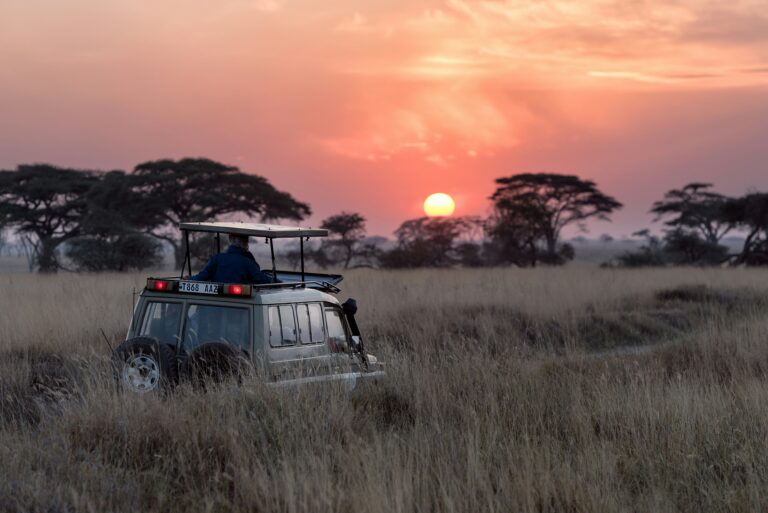
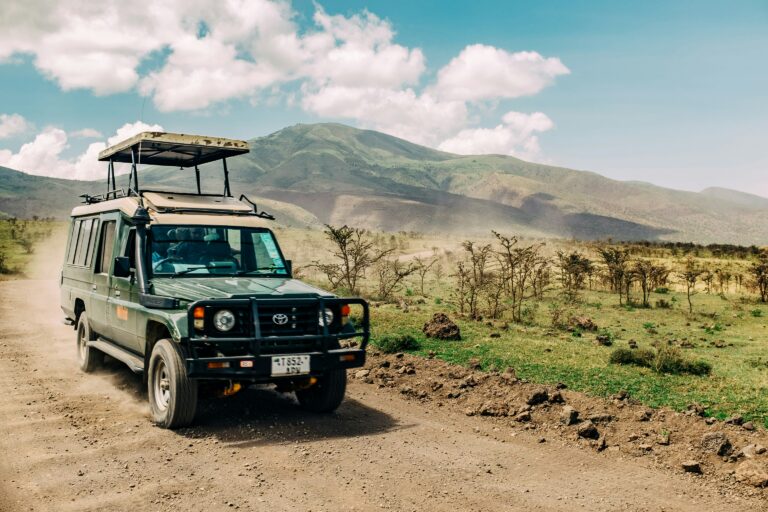
Organizing a seamless safari involves more than just buying a ticket at the park gate. It requires securing a high-quality, comfortable 4×4 vehicle, hiring a knowledgeable naturalist guide who speaks excellent English, and timing the entry perfectly to beat the crowds.
Park entrance fees and regulations frequently update. As of the 2024/2025 season, foreign visitor entrance fees vary by park and are calculated in USD but paid in LKR, often requiring complex ticketing processes. When you travel with Baurs Travels, every logistical detail is handled. Your only responsibility is to have your camera ready.
Whether you are seeking the thrill of a leopard hunt in Yala, the gentle giants of Udawalawe, or the breathtaking scale of the Minneriya Gathering, we tailor the experience to your exact preferences. We blend Swiss precision in our planning with the warmth of Sri Lankan hospitality in our execution, ensuring your safari is nothing short of extraordinary.
Frequently Asked Questions
What is the best time of day to go on a safari in Sri Lanka?
The best time depends on the park and the wildlife you wish to see. For Yala, early morning (entering at 6:00 AM) is crucial for spotting leopards before the midday heat. For Udawalawe and Minneriya, late afternoon (around 3:00 PM) is generally best, as elephants emerge from the forest to drink and bathe in the reservoirs as the temperature cools.
Are wildlife sightings guaranteed on a Sri Lanka safari?
No, wildlife sightings are never guaranteed. These are vast, untamed national parks where animals roam freely according to natural rhythms, weather patterns, and food availability. While expert trackers significantly increase your chances of spotting specific species like leopards or bears, the unpredictability is part of the authentic wilderness experience.
Is Yala National Park closed during certain months?
Yes, the Department of Wildlife Conservation typically closes Block 1 of Yala National Park for a period of 4 to 6 weeks, usually between early September and late October. This closure allows the ecosystem to recover during the peak of the dry season and facilitates park maintenance. During this time, safaris can be redirected to other blocks of Yala or nearby parks like Lunugamvehera.
Can I do a safari as a day trip from Colombo?
While technically possible to visit Udawalawe or Minneriya as a long day trip from Colombo (requiring 8 to 10 hours of round-trip driving), we highly advise against it. The sheer travel time makes for an exhausting day and detracts from the luxury experience. We recommend incorporating the safari into a broader, multi-day itinerary, staying at a nearby eco-lodge or hotel for at least one night.
Which park is best for families with small children?
Udawalawe is widely considered the best safari for families with young children. The open landscape provides excellent visibility, and the high density of resident elephants means sightings are frequent and reliable. This keeps children engaged and entertained, avoiding the long, quiet periods of searching that are often required in denser parks like Yala.
Ready to design your ultimate Sri Lankan wildlife adventure? Discover the island’s natural wonders with the expertise and seamless service of Baurs Travels. Contact our travel specialists today to begin crafting your bespoke luxury safari itinerary.