Weligama is a coastal town located in the Matara District of Sri Lanka’s Southern Province. The name Weligama means “sandy village”, derived from the Sinhala words veli (sand) and gama (village), referring to its wide sandy bay and long coastline.
Historically, Weligama was a traditional fishing settlement and an important coastal stop along southern maritime routes. Fishing remains a key livelihood, and the town is especially known for stilt fishing, a unique traditional fishing method practiced along parts of the coast. Weligama is also home to important cultural heritage sites, including the ancient Kushtarajagala (Kusta Raja Gala) rock carving, believed to date from between the 6th and 9th centuries AD, which reflects the area’s long religious and artistic history.
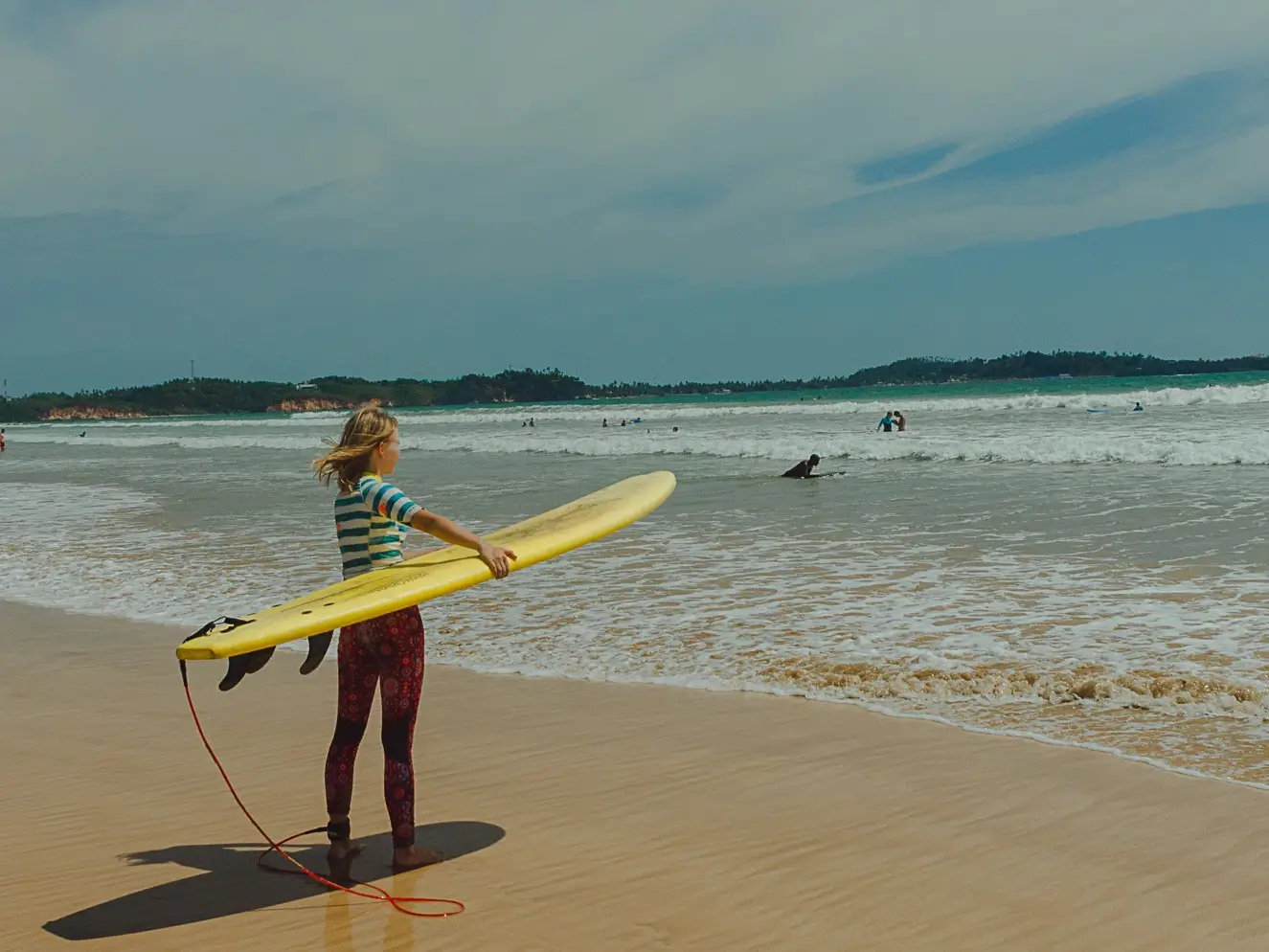
During the colonial period, Weligama developed alongside nearby ports such as Galle and Matara, while preserving its fishing-based community life. In modern times, Weligama has become internationally known as one of Sri Lanka’s leading surfing destinations, especially popular with beginner surfers, while continuing to blend traditional culture with tourism.
Major Tourist Attractions in Weligama
Weligama Beach
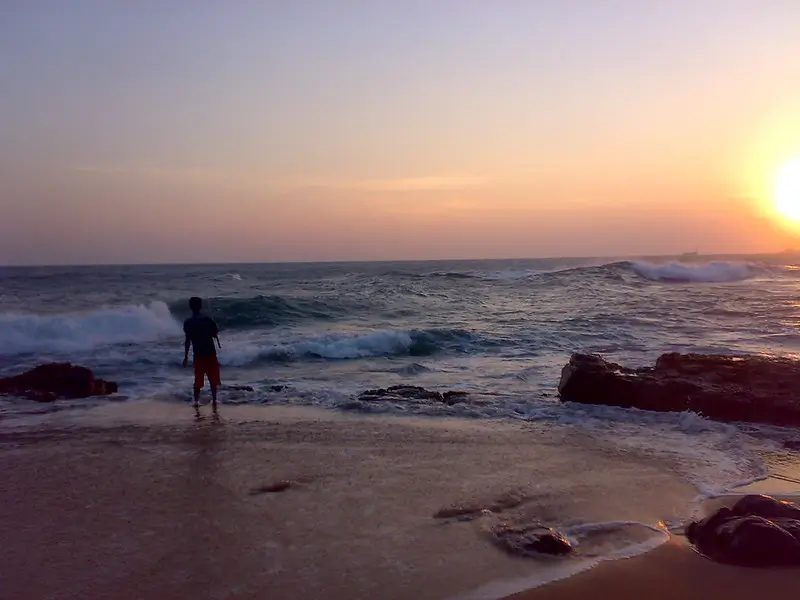
Weligama Beach is the town’s main attraction, featuring a large horseshoe-shaped bay with gentle waves. Its sandy seabed and shallow waters make it one of the best places in Sri Lanka to learn surfing, attracting surfers from around the world.
Stilt Fishermen
The sight of stilt fishermen perched on wooden poles in the shallow sea is one of Weligama’s most iconic cultural images. Although fewer fishermen practice this method today, it remains an important symbol of Sri Lanka’s coastal heritage.
Kushtarajagala (Kusta Raja Gala)
This ancient rock-carved statue, believed to represent a Bodhisattva figure or a legendary king, is one of Weligama’s most significant historical landmarks. It provides insight into early Buddhist influence in the region.
Taprobane Island
Located just offshore in Weligama Bay, Taprobane Island is a small private island known for its distinctive villa and scenic beauty, adding to the charm of the bay.
Local Fish Market
The Weligama fish market offers visitors a chance to experience local daily life, with fishermen bringing in fresh catches early in the morning. It reflects the town’s strong connection to the sea and traditional livelihoods.
Nearby Attractions
Weligama also serves as a convenient base to visit nearby destinations such as Mirissa (whale watching), Ahangama and Midigama (advanced surf spots), and Galle Fort, a UNESCO World Heritage Site.
Best Season to Visit Weligama
Weligama is a unique coastal destination that combines rich fishing traditions, ancient cultural heritage, and world-famous beginner-friendly surf beaches. From watching stilt fishermen and exploring ancient rock carvings to learning to surf in its calm bay, Weligama offers an authentic and memorable Sri Lankan coastal experience. Visiting during the November to April dry season ensures the best weather and sea conditions to fully enjoy everything this “sandy village” has to offer.
The best time to visit Weligama is from November to April, during the dry season on Sri Lanka’s southern coast. During this period, the weather is sunny, rainfall is low, and sea conditions are ideal for surfing, swimming, snorkeling, and beach activities.
The monsoon season, from May to October, brings heavier rainfall and rougher seas. While this period is less suitable for water activities, it offers fewer crowds and a quieter atmosphere, appealing to travelers seeking relaxation.